iCharger firmware update stability rule
An iCharger firmware update can add features, however stability wins races. Therefore, the RC Discharger team follows one track-proven rule: if it ain’t broke, don’t fix it. Moreover, many racers update because they want the newest menus or options. Nevertheless, firmware changes can add risk right before a big event.
In fact, your charger sits at the center of every battery choice you make. Consequently, one surprise bug can shake your routine fast. Additionally, a bad change can cost time, confidence, and results.
Why stability matters on race day
First, you need repeatable charge results from practice to mains. As a result, a sudden behavior change can ruin pack prep and focus. Moreover, racers often tune by small margins, so consistency matters most.
On the other hand, new firmware may shift how the charger reports voltage, internal resistance, or cutoff behavior. Therefore, your notes from last week may stop matching today. Ultimately, stability protects your baseline.
The golden rule of firmware
If your charger runs flawlessly, then you do not need to chase updates. Instead, lock in what works and protect your routine. Furthermore, keep your race-week prep boring and predictable.
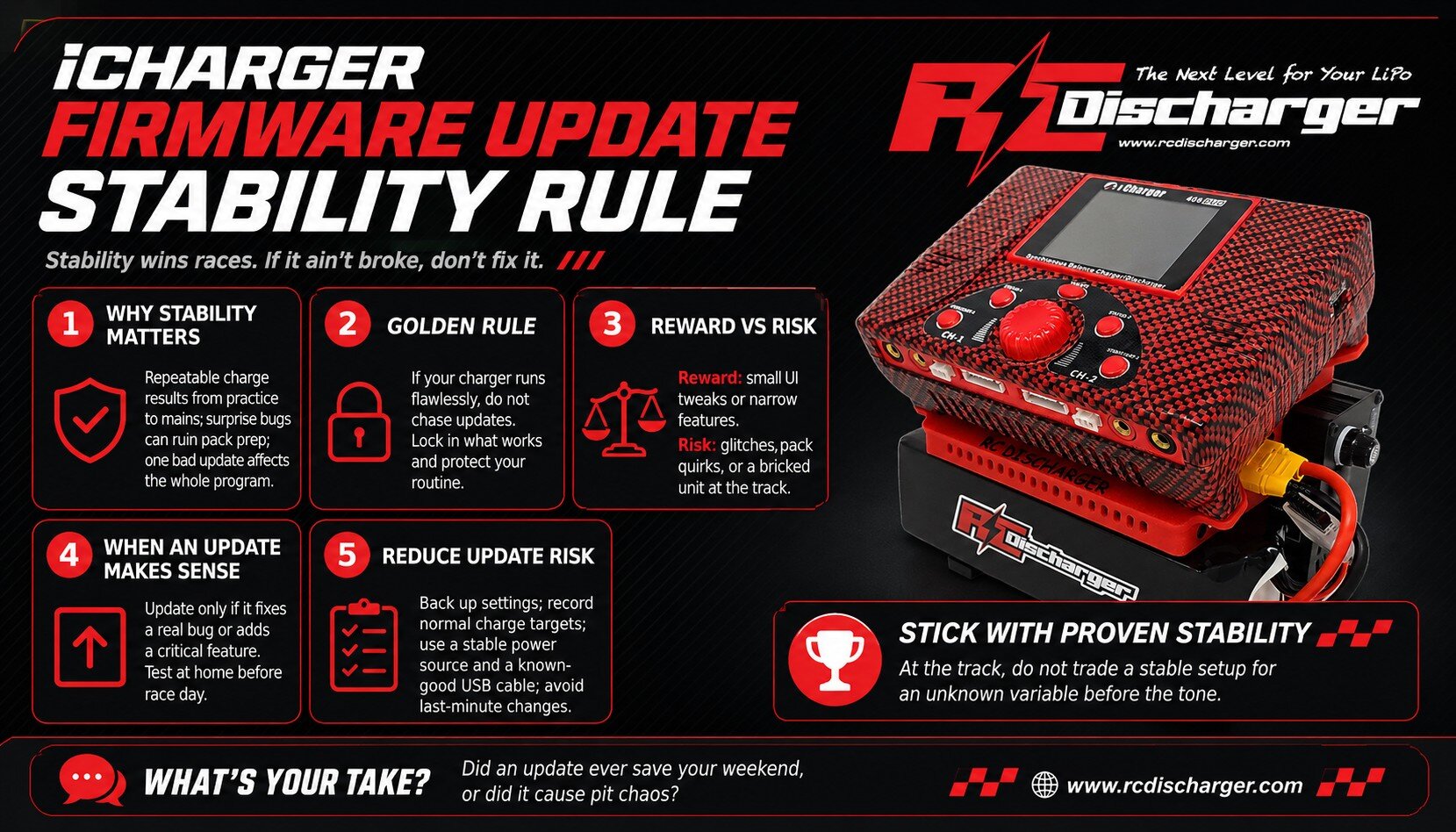
- The reward: Usually small UI tweaks or narrow features you may never use.
- The risk: Glitches, older pack quirks, or even a bricked unit at the track.
When an update makes sense
Only install an iCharger firmware update when it solves a real problem. Specifically, look for clear release notes and a direct match to your issue. Additionally, treat updates like a setup change, not a casual click.
- First, update if it fixes a bug you face right now.
- Second, update if it adds a critical feature your program needs.
- Finally, update if the manufacturer documents a safety fix you should not ignore.
Additionally, test at home before race day. Then, run a full charge and storage cycle on a practice pack. Next, compare results against your normal notes.
How to reduce update risk
Before you start, back up settings and record your normal charge targets. Next, use a stable power source and a known-good USB cable. Furthermore, read a neutral overview of firmware update safety basics so you understand the risks. Finally, avoid last-minute changes the night before a major race.
Likewise, keep one “control” pack for testing after any change. Consequently, you can spot odd heat, timing shifts, or early cutoff behavior. Therefore, you protect the packs you plan to race.
Stick with proven stability
At the track, you want your gear to act like it did yesterday. Therefore, do not trade a stable setup for an unknown variable before the tone. Moreover, if you must update, do it early in the week and validate every step.
Ultimately, consistency helps you extract maximum power and longer pack life. If you want your batteries to deliver the same punch run after run, keep the charger routine steady and focus on conditioning. As a result, you arrive on the driver stand with confidence, not questions.